 River Ridge Dumpster RentalRiver Ridge Dumpster Rental
Delivered on Time. Driveways Protected.
Securing an equipment rental service Plainville contractors and homeowners rely on keeps projects moving forward without capital delays. Our local dispatch coordinates equipment delivery near me across Hartford County, landing machinery right where work begins. Call (959) 241-5921 to confirm machine availability or text a photo of your access gates for instant footprint confirmation.
Call (959) 241-5921
Text or call a photo of your project or driveway — we'll size it right.
A firm, all-in price confirmed before we start — no surprises.
Dropped where you want it, then picked up or swapped when you're done.
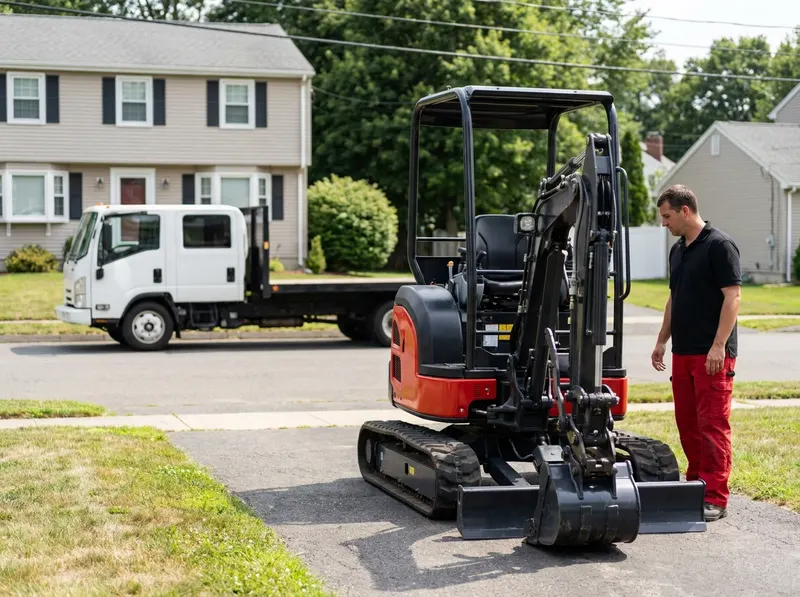
Compact excavators ranging from 1.5 to 8 metric tons handle drainage trenching, footings, and utility excavation. Rubber tracks protect driveways while zero-tail swing configurations prevent collisions with foundation walls and trees in tight residential lots. Operating weights, dig depths from 7 to 15 feet, and auxiliary hydraulic flow accommodate hydraulic breakers, grading buckets, and auger attachments.
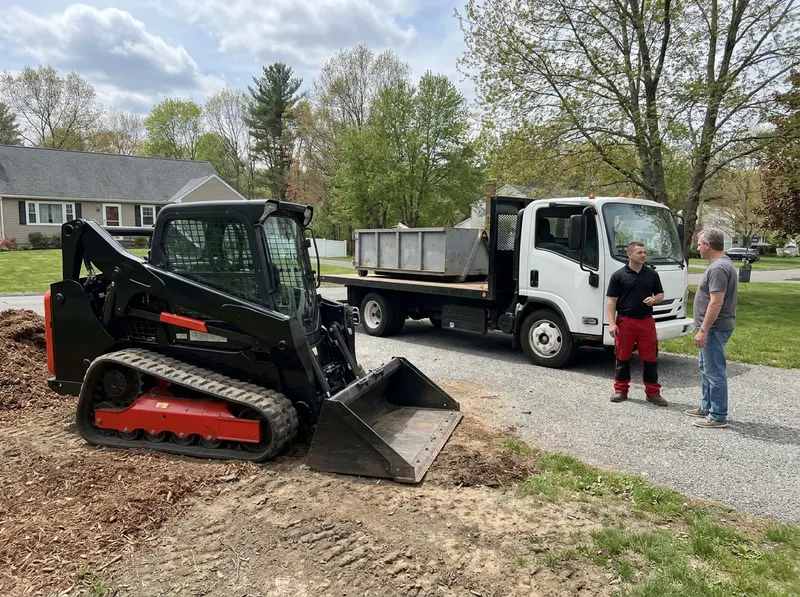
Tracked skid steers provide high traction and low ground pressure over soft loam, mud, and unpaved grades. Units operate with tipping capacities from 1,500 to 3,200 pounds to handle palletized stone, topsoil distribution, and site leveling. Routine rentals include standard general-purpose buckets, hydraulic grapple attachments for brush clearing, and pallet forks for rapid freight staging.
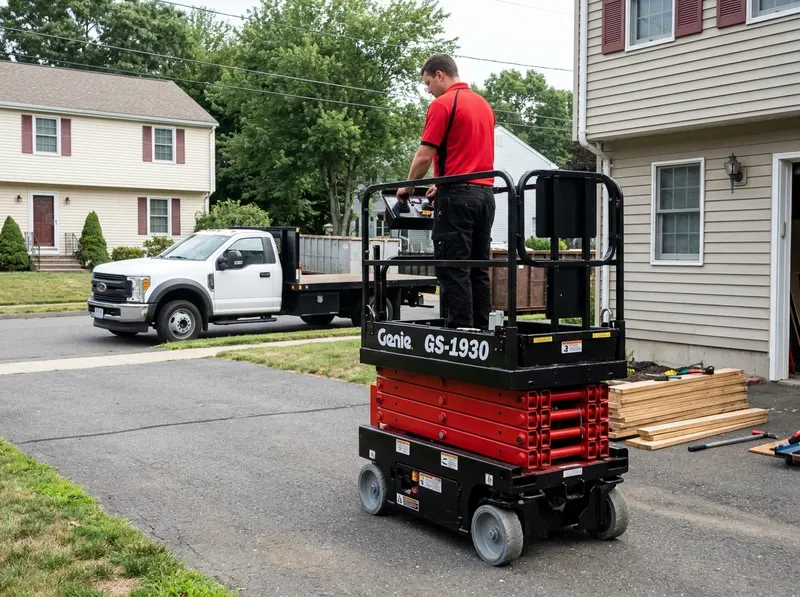
Slab scissor lifts and rough-terrain units provide stable elevated platforms for commercial electrical, siding, and mechanical installations. Electric scissor lifts offer platform heights from 19 to 32 feet with non-marking tires for indoor facility maintenance. Engine-powered rough-terrain models provide platform heights up to 43 feet with auto-leveling hydraulic outriggers for exterior work.
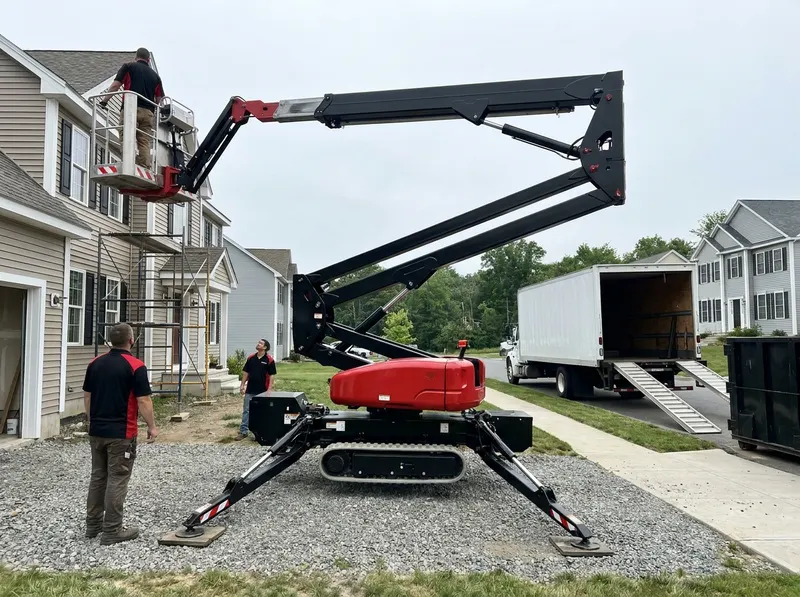
Straight and knuckle boom lifts provide high-reach access over obstacles, roof eaves, and structural steel framing. Articulating booms provide up-and-over positioning with platform heights from 34 to 60 feet for tight commercial building perimeters. Telescopic straight booms provide extended horizontal reach across ditches and unfinished grading where access vehicles cannot pull directly adjacent to the building.
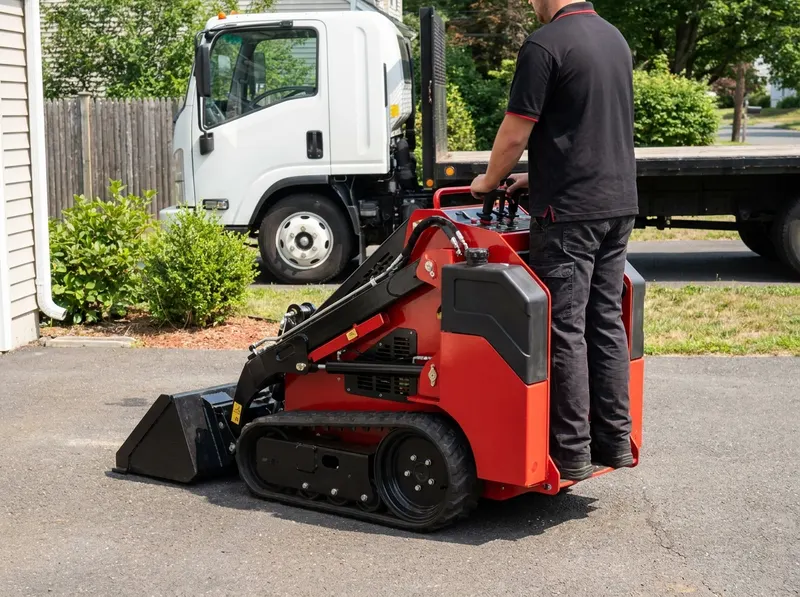
Compact utility loaders provide high-volume material handling through standard 36-inch walk-through gates and backyard fences. Operators stand on a suspended rear platform, maintaining excellent visibility while moving soil, gravel, and mulch across finished yards. Quick-attach plates support hydraulic post-hole diggers, trenchers, and landscape rakes with minimal ground disturbance.
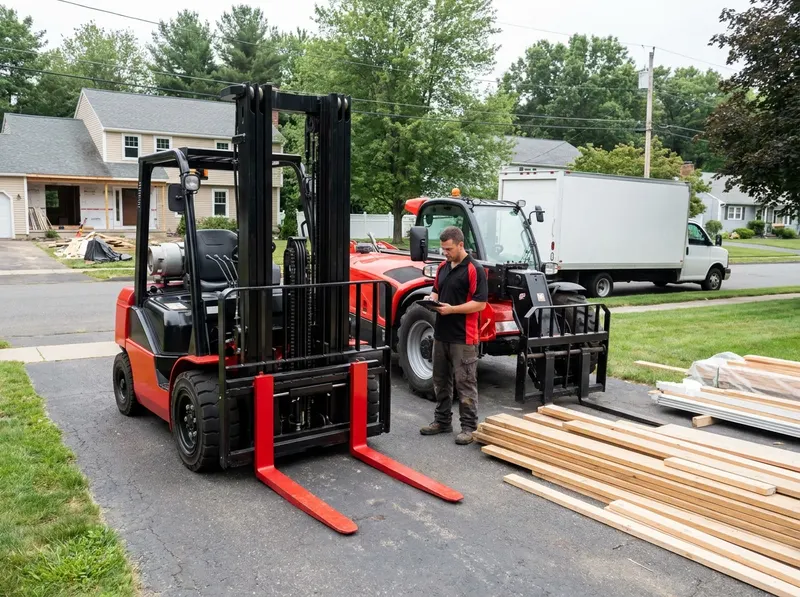
Rough-terrain straight-mast forklifts and variable-reach telehandlers stage framing materials, masonry pallets, and steel beams. Telehandlers offer 5,000 to 10,000-pound load capacities with boom reach extending between 19 and 55 feet across rough construction terrain. Forward stabilization outriggers and frame sway controls allow secure pick-and-place operations on uneven Hartford County soils.
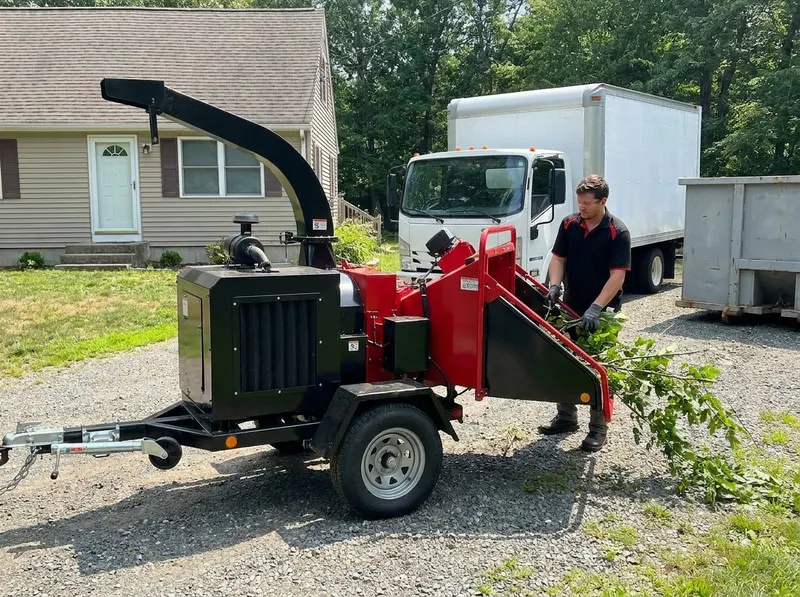
Commercial disc and drum wood chippers reduce large limbs and storm clearing brush into usable ground mulch quickly. Heavy-duty feed rollers handle trunk diameters up to 12 inches using auto-reversing hydraulic feed systems. Standard pintle and 2-5/16-inch ball hitch setups allow safe highway transport behind capable contractor pickups.
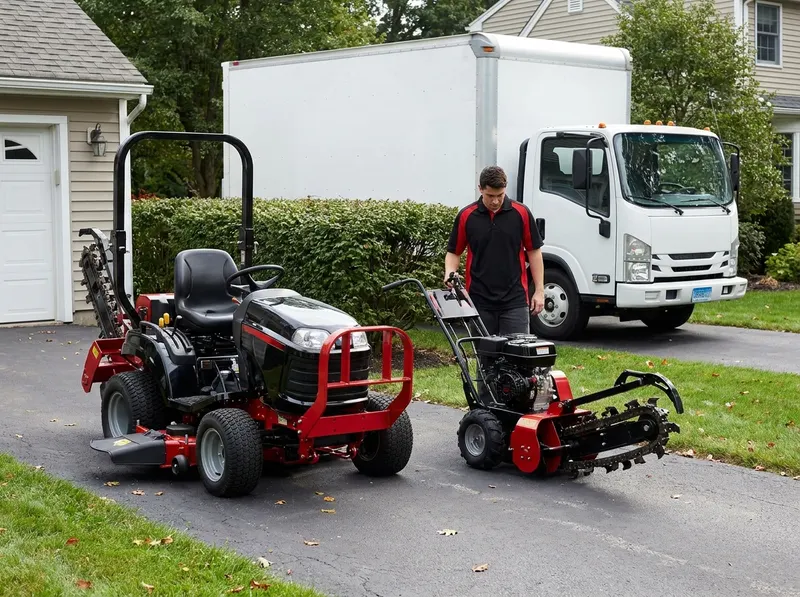
Mechanical trenchers excavate dedicated channels for direct-bury electrical lines, gas pipes, and lawn irrigation systems. Walk-behind trenchers cut clean 4 to 6-inch wide paths up to 36 inches deep through compacted soils. Heavy-duty rock chains cut smoothly through roots and small stone beds while spoil augers cast extracted earth neatly to the side for rapid backfill.
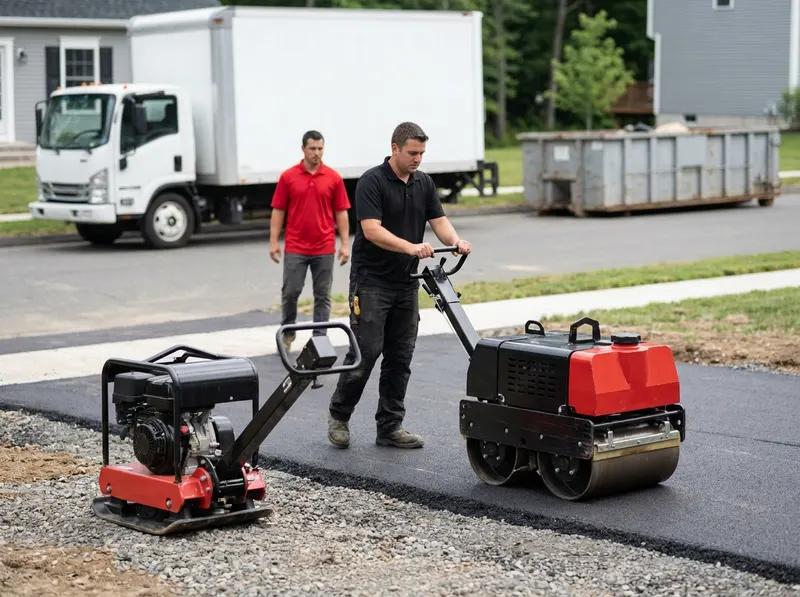
Vibratory plate compactors and tandem smooth-drum ride-on rollers prepare sub-bases for asphalt paving, paver walkways, and slab pours. Forward and reversible vibratory plates provide centrifugal compaction forces from 3,000 to 9,000 pounds for cohesive clay and gravel. Smooth drum rollers ensure consistent density and aggregate lock across asphalt driveways and parking pads.
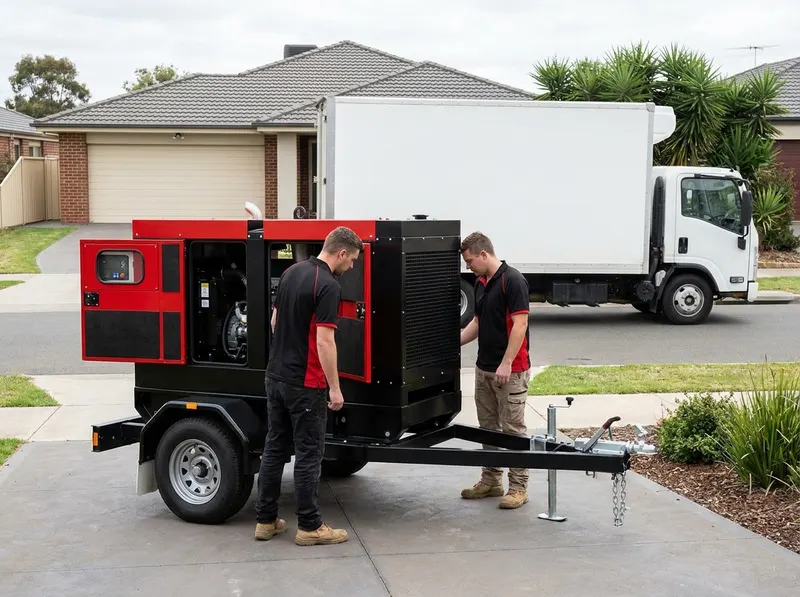
Trailer-mounted, sound-attenuated diesel generators deliver reliable prime electricity to commercial jobsites and remote utility connections. Power outputs range from 25 kVA to 150 kVA, providing 120V, 208V, and 480V three-phase industrial configurations. Onboard fuel cells run 24 to 36 hours under heavy electrical loads with digital voltage monitoring and external emergency stop switches.
Selecting earthmoving equipment requires matching machine weight and track style to your soil density and gate access. If you need to clear foundations or dig trenches along tight residential corridors in Cooks Grove or Stillwell, choose a mini excavator weighing under 8,000 pounds. If you need to shuttle bulk loam, crushed trap rock, or site backfill across flat acreage near Bradley or Whiting Street District, choose a tracked skid steer. The trade-off is hydraulic reach versus lateral payload speed: mini excavators dig deep without moving their tracks, while skid steers move bulk material fast but cannot dig below track level without ramped approaches. When deciding between a standard enclosed-cab skid steer and a compact stand-on mini skid steer, evaluate your path width and surface fragility. Choose a standard skid steer if your project demands a 2,000-pound operating capacity and heavy breakout force for rocky glacial till near Metacomet; choose a stand-on mini skid steer if you must clear a 36-inch yard gate, minimize turf rutting on manicured lawns, or step on and off the machine constantly to set fence posts. The trade-off is lifting capacity and operator comfort against entry clearance and low ground pressure. For aerial reach, choose an electric scissor lift if your task involves interior ceiling or duct installations over cured concrete slabs, or choose a rough-terrain boom lift if you must reach exterior rooflines across uneven, muddy ground near Paderewski Park. Scissor lifts limit movement to vertical axes on flat pads, whereas rough-terrain boom lifts offer compound horizontal outreach at the expense of a much wider staging footprint and heavier trailer transport requirements.
Your exact price is confirmed before any work begins.
Operating heavy machinery along the base of Pinnacle Rock and the Metacomet Trail requires planning for rocky glacial till and sudden ledge transitions. Properties located in low-lying sections near Norton Park and the Pequabuck River floodplain demand tracked machines with low ground pressure to avoid severe soil rutting. Whether your crew is completing utility connections near Robertson Airport or landscaping beside the Farmington Canal Heritage Trail, our equipment delivery staging accounts for Plainville road weight restrictions and tight residential setbacks.
Neighborhoods we cover: Cooks Grove, Pinnacle Heights, Plainville Center, Whiting Street District, Metacomet, Camp Street Area, Stillwell, Bradley, Northwest Plainville.
Renting machinery requires a valid government-issued driver's license, a major credit card for the security authorization, and an active certificate of commercial general liability insurance naming the equipment rental company as an additional insured for larger machinery. Residential property owners renting compact equipment can secure physical damage coverage directly through standard rental protection plans at the time of dispatch.
Equipment transports on dedicated flatbeds or tilt-deck tag trailers directly to your designated site address across Plainville, including the Camp Street Area and Plainville Center. Our haul drivers confirm clear overhead utility drops, secure drop-off areas on asphalt or solid aggregate, and provide a five-minute controls walkthrough covering machine switches, safety cutoffs, and daily grease/fluid inspection points.
Backfill trenches using the excavator's front push blade perpendicular to the trench line, rolling clean aggregate or fill forward in uniform 6 to 8-inch lifts. To grade cleanly, open the bucket teeth flat to the target contour, extend the dipper arm, and pull excess material toward the cab using low, steady hydraulic pressure while feathering the boom control up to maintain a level finish.
Position the trailer on level ground coupled to a rated tow vehicle, set the trailer wheel chocks, and back the skid steer up the ramps slowly so the heavy engine compartment faces uphill. Center the machine weight over the trailer axles to secure 10 to 15 percent tongue weight, lower the attachment flat, engage the parking brake, and secure four direct tie-down points using grade 70 transport chains and ratchet binders ratcheted down at 45-degree angles.
Equipment transport routes run daily from Plainville into neighboring municipalities throughout Hartford and Litchfield counties. Common job-site delivery zones include Southington, Bristol, New Britain, Farmington, Berlin, and Cheshire, providing rapid swap-outs and equipment support across the Central Connecticut corridor.